
The era of brand-owned peanut butter factories is coming to an end. To simplify costs and operations, brands are rapidly adopting white-label solutions as the modern, efficient path to market. Importing peanut butter may seem like a straightforward task, but it comes with its own set of risks, including inconsistency, missing certifications, and a lack of adherence to expectations. Real challenges that require real solutions. In this blog, we help aspiring brands ask the right questions of their peanut butter suppliers to increase their chances of success.
Choosing the right peanut butter manufacturer isn’t merely about the cost-effective quote but a matter of understanding the finer details of global compliance, maintaining consistent quality at scale, and, more importantly, treating your success as their own. Peanut butter white labeling is becoming a lucrative option with trusted peanut butter manufacturers in India, like Nuflower. After decades of supplying over 29,000 MT of nut-based products to organizations like UNICEF and WFP, we’ve seen what separates reliable manufacturers from those who can’t deliver when it matters most.
Having been in the business, we have supported numerous businesses to build and scale profitable brands worldwide. However, we have also heard some serious concerns from their previous experiences.
Here are five critical questions that will help you identify a peanut butter white labeling solutions partner who can actually grow with your business.
-
- Mitigating Import Risk: Global Compliance & Certification
- Supply Chain Reliability: Ensuring Consistency at Scale
- Market Adaptation: R&D for Regional Formulations
- FAQ
Mitigating Import Risk: Global Compliance & Certification
Compliance is key, and hence one of the first questions to ask your peanut butter manufacturer is about certifications.
Why are certifications important, you ask?
When your shipment sits in customs because the Halal certification doesn’t cover the specific product code you’re importing, you’re not just delayed – you stand a very real chance of paying demurrage charges that can run up to hundreds of dollars per day.
When a retailer audits your supplier documentation and finds expired certificates, they don’t just drop your product; they often blacklist your brand from future submissions.
Here are some important certificates
-
- FSSAI (Food Safety and Standards Authority of India) for manufacturing compliance
- ISO 22000 for food safety management systems
- HACCP certification for hazard analysis and critical control points
- Halal and Kosher certifications if targeting Middle Eastern or specific Western markets
- Organic certifications, if you’re positioning premium products
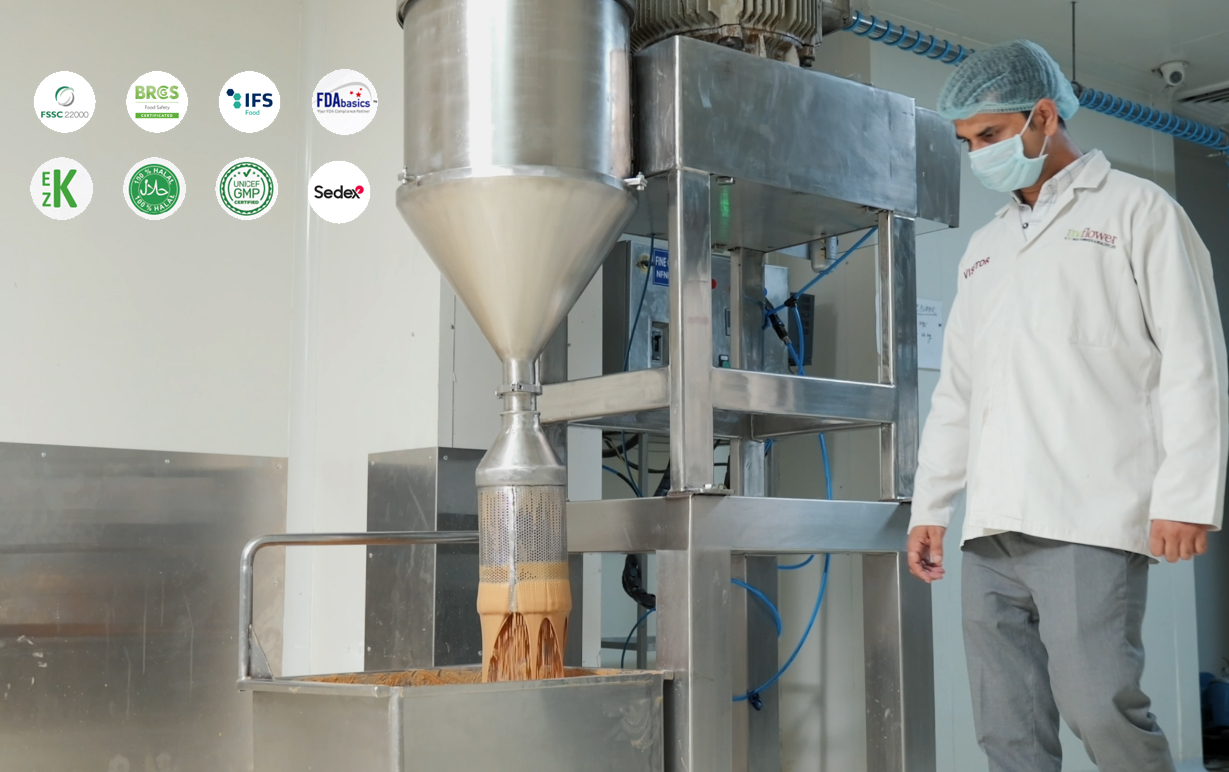
At Nuflower, our state-of-the-art facility maintains multiple international certifications because we supply humanitarian organizations that demand absolute compliance. When your shipment clears customs smoothly while competitors face delays, you’ll understand why documentation matters.
Supply Chain Reliability: Ensuring Consistency at Scale
When building and scaling a successful brand, it is important to ensure consistency across batches. Your customers expect their very first jar to taste identical to every jar they purchase from you. However, the struggle to maintain consistency is a real challenge.
Something as simple as a fluctuation in roasting temperature can cause a world of difference – by just a 15°C fluctuation, your batch can end up with a completely different flavor profile. One batch tastes fresh and nutty. The next one tastes slightly burnt. The third is bland. Your customers can’t articulate the problem, but they stop buying.
With over a decade of experience and a 60 MT daily production capacity, we’ve refined processes that eliminate the variables causing quality drift. Our manufacturing facility uses automated systems that remove human error from critical control points, ensuring your brand delivers the same experience in every jar.
Market Adaptation: R&D for Regional Formulations
A one-size-fits-all no longer works in global peanut butter markets. European consumers expect different sweetness levels than Middle Eastern buyers. Asian markets often prefer finer, creamier textures than American consumers. Australian regulations might restrict ingredients that are acceptable elsewhere.
As a direct Indian peanut butter manufacturer with in-house R&D capabilities, Nuflower partners with brands for recipe formulation and experimentation. We understand that your brand differentiation starts with the product itself, not just the label design. In addition, we already have a whole suite of flavor profiles to be chosen from – including creamy peanut butter, crunchy peanut butter, and almond, cashew, and pistachio flavoured nut butters.
Also Read
The Future of White Label Peanut Butter: Key Trends to Watch in 2025
The Silent Partners of Success: White Label Solutions for your Peanut Butter Brand
The Art of the Perfect Crunch: How Processing Techniques Impact Quality
FAQ
Why is choosing the right peanut butter supplier critical for my business?
Your supplier directly impacts product quality, delivery reliability, and ultimately your brand reputation. A poor supplier choice can lead to inconsistent products, missed delivery windows, compliance issues, and lost customer trust. The right partner helps you scale confidently while maintaining quality standards that keep customers coming back.
How long does it take to receive my first order after signing a contract?
For standard formulations with our existing packaging options, lead time is typically 4-6 weeks from deposit to container ready for shipment. Custom formulations requiring R&D work may need an additional 2-3 weeks for recipe development and testing.
What packaging options do you offer for white label peanut butter?
We offer flexible packaging solutions and can accommodate specific label design, jar specifications, and carton requirements. Our team can also recommend optimal packaging based on your target market and distribution channels.
Choosing a peanut butter supplier is about finding a reliable partner who protects your brand reputation and helps you scale. The three questions above will separate manufacturers who talk a good game from those who consistently deliver.
At Nuflower, we’ve streamlined resources, effort, and time down to the smallest details to maximize your profit margins while never compromising on quality.
Mitigate your import risks with Nuflower – your partner built for global scale. Request a technical capability profile from our export desk today.