
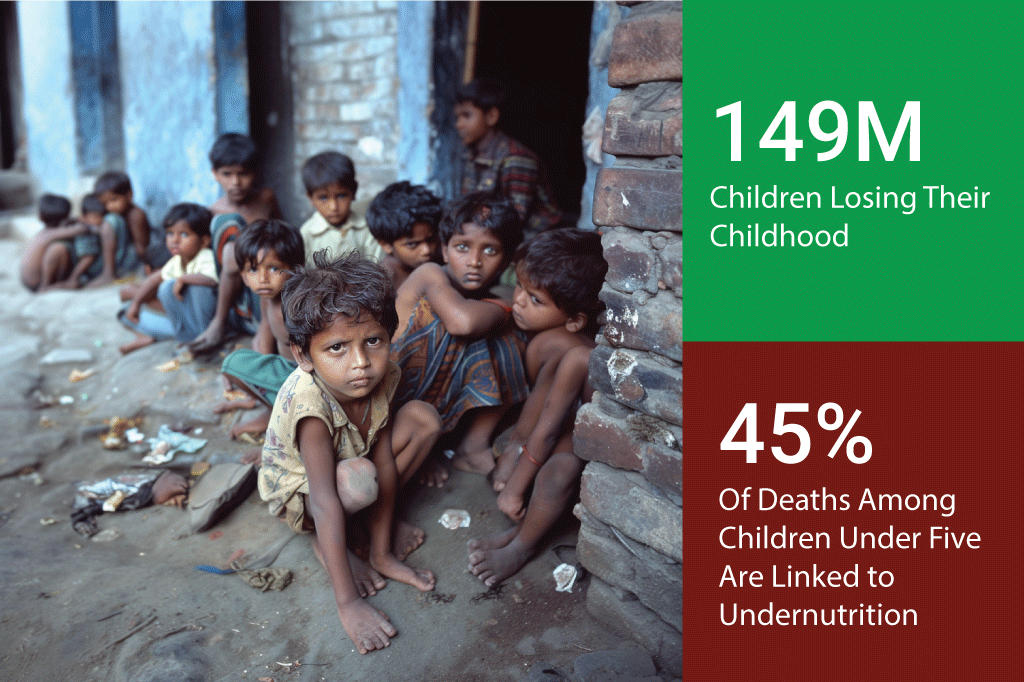
The world continues to grapple with child malnutrition with 149 million children losing their childhood to this deadly disease. In cases where malnutrition is left untreated, fatality is guaranteed. 45% of deaths among children under five are linked to undernutrition. This statistic is a wake-up call for countries to look into solutions to eradicate malnutrition.
The United Nations International Children’s Emergency Fund (UNICEF), established in the aftermath of World War II to provide emergency food and healthcare to children in war-torn Europe has time and again advocated for effective measures to fight child malnutrition. In fact, as one of the most respected world organizations, UNICEF is now a global force for child welfare, education, and healthcare.
Over the years, UNICEF has taken many steps to fight the sturdy grip of malnutrition but the most significant interventions in recent years have been using Ready-to-Use Therapeutic Food (RUTF). RUTF has been recognized as an effective means to combat malnutrition in children worldwide, redefining child nutrition strategies on a global scale. RUTF is a game-changer in the battle against child malnutrition, mainly in regions struggling with food insecurity and humanitarian crises.
RUTF is essentially a nutrient-rich blend of dense foods like peanuts, oil, sugar, and milk powder loaded with essential vitamins and minerals. It is a ready-to-use paste that does not require high efforts like refrigeration, cooking, or clean water to consume, especially in places where these facilities may not be readily available. Its simplicity and effectiveness make it an ideal and timely solution for treating severe acute malnutrition in children, allowing for decentralized distribution and community-based treatment programs.
UNICEF, in collaboration with other humanitarian organizations and governments, continues to raise awareness of the adoption of RUTF in emergency settings and low-resource environments. By integrating RUTF into existing healthcare systems and nutrition programs, UNICEF has improved the accessibility of life-saving treatment for malnourished children, even in the most challenging circumstances.
One of the many advantages of RUTF is its effectiveness in treating severe acute malnutrition (SAM), a life-threatening condition that requires immediate intervention. Unlike traditional therapeutic foods that require preparation and refrigeration, RUTF can be administered at home by caregivers, eliminating the need for hospitalization in many cases. This approach not only reduces the burden on healthcare facilities but also empowers communities to take charge of their children’s health almost instantly.
RUTF has historically yielded remarkable results in a short period. Children treated with RUTF experience rapid weight gain and recovery from malnutrition within a few weeks, leading to improved overall health and reduced mortality rates. This quick turnaround is crucial in emergencies where time is of the essence and resources are limited.
UNICEF’s commitment to scaling up the production and distribution of RUTF has had a profound impact on child nutrition outcomes worldwide. By partnering with local manufacturers and suppliers like Nuflower, UNICEF has helped build sustainable supply chains for RUTF production, ensuring continuous availability in regions prone to food insecurity and emergencies. Additionally, UNICEF’s advocacy efforts have raised awareness about the importance of RUTF as a frontline intervention for malnutrition, garnering support from governments, donors, and the public alike.
Looking ahead, UNICEF’s efforts to redefine child nutrition through RUTF offer valuable lessons and insights for the global health community. The success of RUTF underscores the importance of innovation, collaboration, and a holistic approach to tackling complex health challenges. By prioritizing evidence-based interventions, community engagement, and sustainable development goals, UNICEF is paving the way for a future where every child has access to the nutrition they need to thrive and reach their full potential. As we continue to confront the daunting task of eradicating malnutrition, UNICEF’s work with RUTF serves as a beacon of hope and a testament to the power of collective action in creating a healthier, more equitable world for all.